
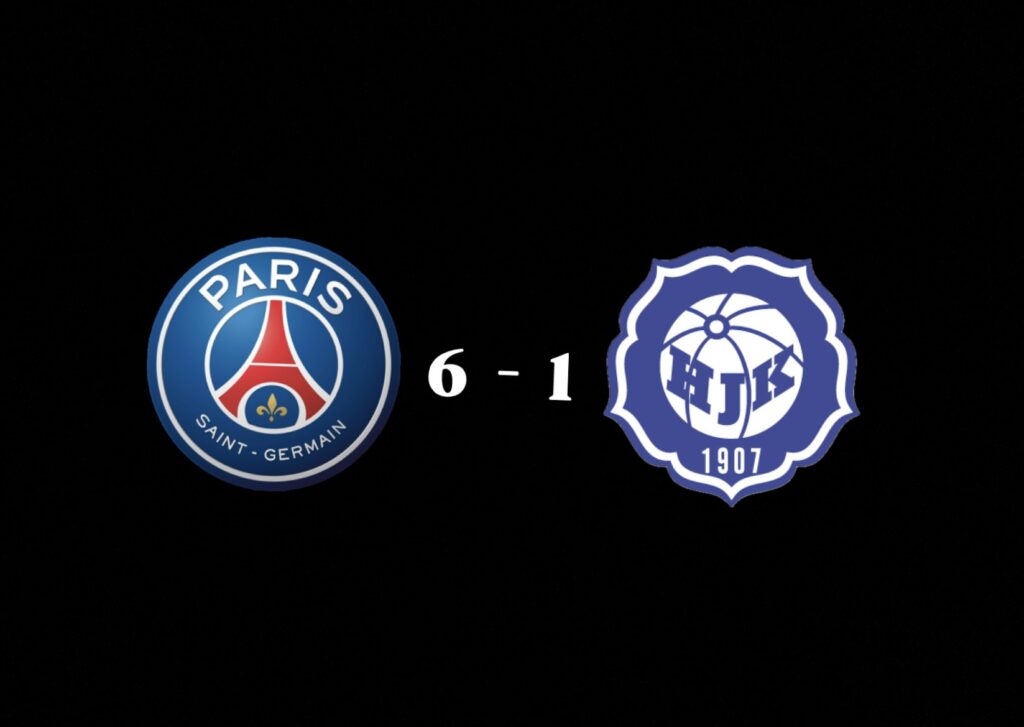
PSG U19 produced an impressive tactical and attacking performance to defeat HJK U19 6–1 in the UEFA Youth League Play-Offs and secure progression to the next round.
Paris Saint-Germain U19 secured qualification for the next stage of the
UEFA Youth League
after recording a convincing 6–1 victory against HJK U19 in the Play-Off round.
The French side entered the match with a clear strategic approach, aiming to establish control through structured possession in deeper midfield areas before progressing the ball vertically into advanced zones. From the opening minutes, PSG demonstrated its ability to maintain positional discipline during build-up phases, circulating the ball efficiently between the defensive and midfield lines.
PSG’s ability to dictate tempo was evident throughout the first half. Their midfield unit consistently created passing triangles in central areas, allowing them to bypass the initial pressing attempts from HJK.
Overlapping full-back movements provided additional width, enabling attacking players to operate in more advanced half-spaces. This positional flexibility made it increasingly difficult for HJK to maintain defensive compactness.
As the match progressed, PSG began to generate more consistent attacking opportunities inside the penalty area. Quick combinations between midfield and forward lines allowed them to disrupt defensive positioning and create shooting situations from central areas.
The attacking transitions were particularly effective following possession recoveries. PSG demonstrated an ability to immediately advance play after regaining the ball, minimizing the opposition’s opportunity to reorganize defensively.
HJK attempted to respond by maintaining a deeper defensive block, prioritizing compactness between defensive lines. However, PSG’s technical quality in tight spaces enabled them to maintain pressure throughout extended periods of possession.
While PSG’s attacking performance was the primary factor in the result, their defensive structure also played an important role in limiting opposition opportunities.
During defensive phases, PSG maintained a balanced shape that restricted central passing lanes. This forced HJK to rely on wider attacking routes, which were effectively managed through positional awareness and recovery runs from PSG’s defensive unit.
Even when transitions occurred, PSG demonstrated strong organizational discipline, allowing them to quickly regain control of territorial advantage.
The consistent ability to progress possession into advanced zones and maintain pressure in attacking areas ultimately proved decisive. PSG’s structured approach during both attacking and defensive phases enabled them to manage the rhythm of the match effectively.
By combining controlled build-up play with efficient final-third execution, PSG secured a comprehensive 6–1 victory and progression to the next round of the competition.