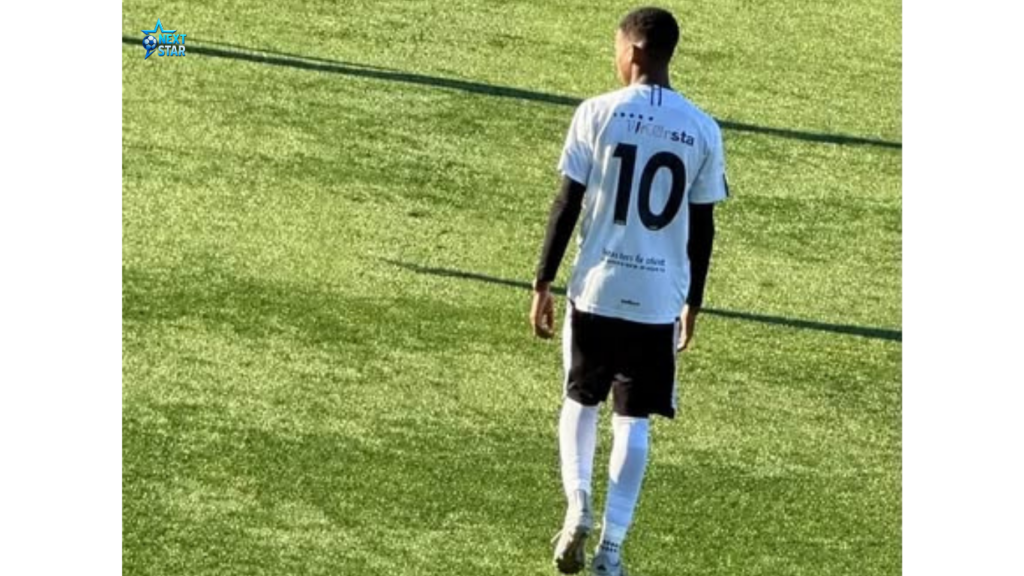
At 17, Olivier Nzayisenga is not just another young attacker producing numbers—his early-season output reflects a player already influencing multiple phases of the game. Representing Ørsta Fotball, he has started the campaign with 3 goals and 2 assists in 3 matches, but the context behind these numbers reveals more than simple productivity.
Output With Context: Not Just Goals
Nzayisenga’s contribution stands out not only for volume but for variety. His goals come from active involvement in attacking sequences rather than isolated moments. He participates in build-up, makes progressive runs, and positions himself effectively in the box.
This suggests:
- awareness of space rather than reactive positioning
- involvement in the phases before the final action
- consistency in attacking presence
For a player of his age, this level of engagement is often a stronger indicator than raw statistics alone.
Role Interpretation: Striker vs Left Winger
His ability to operate both centrally and from the left changes how he impacts the game.
As a striker:
- focuses on vertical movement
- Looks to attack space behind the defense
- positions himself for final actions
As a left winger:
- receives the ball deeper
- engages defenders in 1v1 situations
- creates angles for shots or crosses
This flexibility is not just positional—it changes the rhythm of his involvement. It allows him to influence both structured attacks and transitional moments.
Key Strengths in Match Situations
Speed in Transitional Phases
Nzayisenga’s pace becomes most effective during transitions. When possession is regained, he immediately looks to exploit space, forcing defensive lines to retreat.
Finishing Under Limited Time
His goals reflect composure when opportunities appear quickly. Rather than rushing, he adjusts his body position and selects controlled finishes.
Direct Dribbling
He does not overcomplicate situations. His dribbling is forward-oriented, aimed at creating immediate advantage rather than maintaining possession without progression.
Defensive Effort
He contributes during pressing phases and tracks back when needed. This increases his tactical value, especially in systems requiring a high work rate from wide attackers.
Movement and Decision Patterns
One of the most important aspects of his game is his movement without the ball.
He shows:
- timing in runs to avoid offside
- awareness of defensive gaps
- willingness to reposition based on play development
However, decision-making remains an area for growth. In some situations, choosing between passing, shooting, or carrying the ball can be refined. This is expected at his stage and typically improves with match experience.
Development Environment and Progression
Playing for Ørsta Fotball provides Nzayisenga with consistent minutes—arguably the most important factor for development at 17.
Regular match exposure allows him to:
- test decision-making under pressure
- adapt to different defensive structures
- build consistency over time
His background—born to Rwandan parents and raised in Norway—also reflects the increasingly diverse pathways shaping modern European football development.
Areas to Improve
To progress further, focus will likely be on:
- Final-third decision-making → improving efficiency in key moments
- Physical strength → handling more physical defenders
- Consistency → maintaining performance level across matches
These are natural steps and align with the development path of most young attackers.
Projection
Nzayisenga’s profile fits the modern attacking player: mobile, versatile, and capable of contributing both on and off the ball.
If progression continues in a structured way, his next steps could involve:
- higher competitive level
- more tactical responsibility
- refined role specialization
Conclusion
Olivier Nzayisenga is not defined only by early numbers, but by how he reaches them. His involvement across different phases of play, combined with positional flexibility and work rate, makes him a developing attacker with a solid foundation.
At 17, the focus remains development—but the current indicators show a player moving in the right direction.
Follow Next Star Official for more scouting reports, talent analysis, and youth football news.